Can a Shih Tzu Have Down Syndrome? A Caring, Honest Answer
A quick note on the why: this question comes up again and again in my dog community, from owners who have noticed something a little different about their Shih Tzu and simply want to understand it. I wrote this as a gentle, honest explainer, one dog owner to another.
If you searched for a Shih Tzu with Down syndrome, there is a good chance you are looking at a little dog right now and noticing something different about him. Maybe his face is shaped a bit unusually, maybe he is much smaller than his littermates, or maybe he just seems to move or learn a little differently than other dogs you have known. First, take a breath. Wanting to understand your dog better is the mark of a caring owner, and you are in the right place. Here is an honest answer, and then the part that really matters: how to give a special little dog a happy life.
Can a dog actually have Down syndrome?
The short, honest answer is no, at least not the way people do. Down syndrome in humans is caused by an extra copy of one specific chromosome, the one we call chromosome 21. Dogs do not have the same chromosomes we do. People have 23 pairs, while dogs have 39 pairs, so the exact condition we call Down syndrome cannot occur in a dog in that same way. You will sometimes see photos online labeled as a “Down syndrome dog,” but that is a description people reach for, not an actual diagnosis a veterinarian would make.
So what are people actually seeing?
When someone says their Shih Tzu seems to have Down syndrome, they are almost always noticing something real, just not that particular condition. A few of the things that can look similar include:
- A runt. The smallest pup in a litter can stay smaller, grow more slowly, and seem a step behind the others early on. Many runts catch up and go on to live completely normal lives.
- A condition present from birth. Some dogs are born with things like hydrocephalus (extra fluid around the brain), a liver shunt, or a hormone problem such as congenital hypothyroidism. These can affect how a dog looks, grows, or behaves.
- Facial or skeletal differences. Flat-faced breeds like the Shih Tzu already have a distinctive head shape, and small natural variations can make one dog look unusual next to another.
- A different way of being wired. Just like people, dogs can simply learn and react in their own way, at their own pace.
The important point is that these are different things, with different causes, and only a veterinarian can tell you what is really going on with your particular dog.
Should you be worried?
Not necessarily, but it is worth getting a clear answer. If your Shih Tzu is eating well, growing even slowly, playful, and comfortable, those are all wonderful signs. If you do notice things that concern you, such as trouble walking, a swollen or domed head, very poor growth, frequent stumbling, or changes in appetite or energy, make an appointment with your vet. Many conditions that are present from birth are manageable, especially when they are caught early, and a simple exam plus a few tests can often rule things in or out.
How to care for a special little Shih Tzu
Whatever the cause turns out to be, a dog who is a little different can still have a full, joyful life. A few things that help:
- Keep meals simple and consistent. Smaller or slower-growing dogs often do best with regular, manageable meals.
- Make the home easy to get around. Steady footing, easy access to water, and a cozy safe spot go a long way.
- Be patient with training. Gentle, repeated, reward-based steps work best, and small wins are worth celebrating.
- Stay close with your vet. A good relationship with your veterinarian is the single best tool you have.
- Love them exactly as they are. Dogs do not compare themselves to other dogs. They just want to be with you.
A word from a longtime Shih Tzu owner
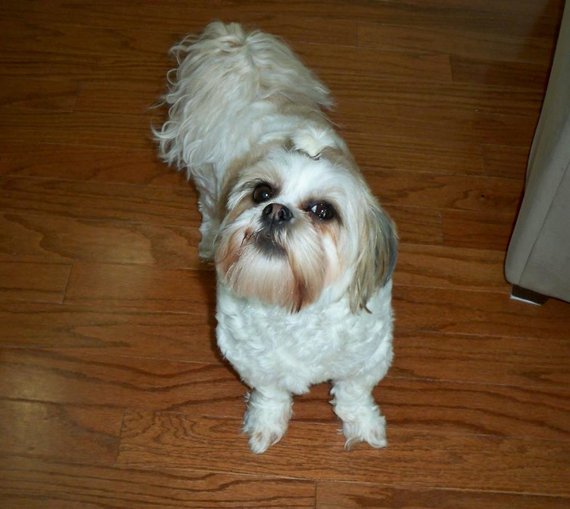
I have shared my life with Shih Tzus for many years, and if there is one thing they have taught me, it is that the size of the dog has nothing to do with the size of the heart. The little one pictured at the top of this post was one of the smallest dogs we have ever had, and one of the sweetest. A small, slow, or special little dog can be the sweetest companion you will ever have. If yours is a bit different, that is not a problem to fix. It is just your dog, and your dog is lucky to have someone who cares enough to look this up.
Frequently asked questions
Can dogs have Down syndrome?
Not in the human sense. Down syndrome comes from a specific human chromosome difference that does not happen the same way in dogs. What looks like Down syndrome in a dog is usually a runt or a condition present from birth that a vet can identify.
Why is my Shih Tzu so small?
It may simply be a runt, or there could be a treatable reason such as a liver shunt or a hormone issue. If growth is very slow or your dog seems unwell, ask your vet to take a look.
Is a runt Shih Tzu unhealthy?
Not necessarily. Many runts catch up and live normal, healthy lives. Regular checkups simply help make sure nothing is being missed along the way.
This article is written from one dog lover to another and is for general information only. It is not veterinary advice and cannot replace an exam by your own veterinarian, who is the only one who can diagnose or treat your dog. If you are worried about your Shih Tzu, please reach out to your vet.
More for Shih Tzu owners
- Shih Tzu Grooming Supplies: Clippers & Blades
- A Walk in the Park with the Shih Tzu — High Cliff State Park
- More dog stories and guides