Grilling Steak on a Big Horn Infrared Broiler
I have gotten into grilling steaks lately, and I want to walk through exactly how I do it. The short version is a good cut, a screaming-hot grill, salt, and a thermometer when I need it. Here is the whole routine.
Start with a good cut
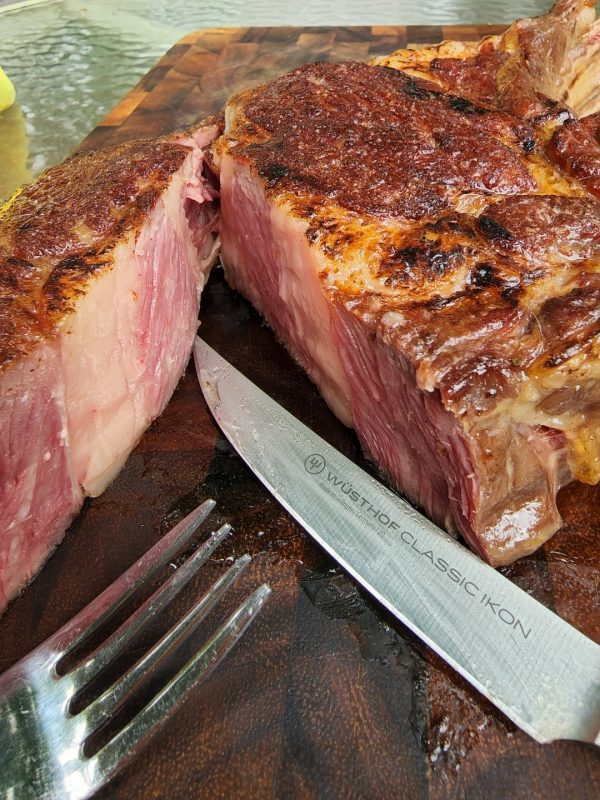
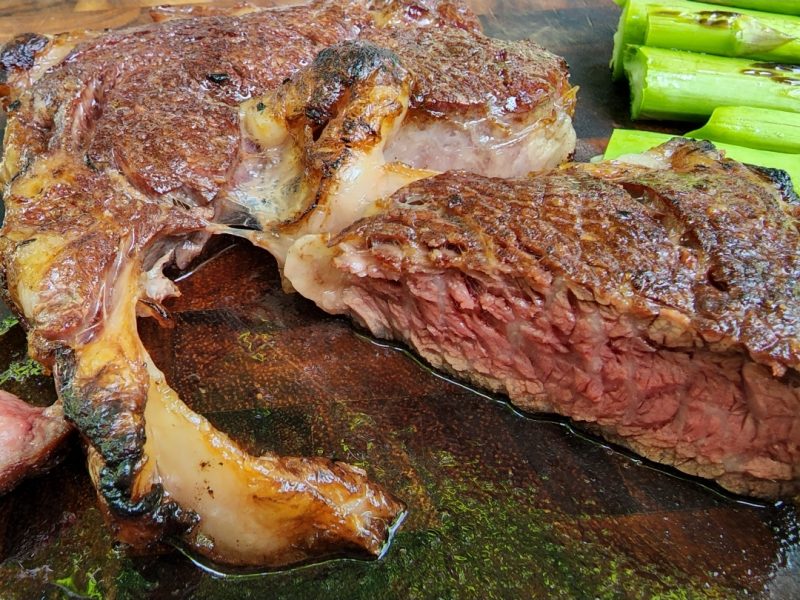
If I am going to make a steak, I am reaching for a ribeye, or sometimes a New York strip. A prime ribeye with good marbling is just about the best thing going. Costco will sometimes have phenomenal options, and I love their little 6 ounce ribeyes when the marbling is right. Those can be staggeringly good. And do not be scared off by what looks like a lot of fat in a ribeye. Most of it renders right down and is easy to eat, not thick gristle you have to chew through.
The grill: a Big Horn infrared broiler
I cook on a Big Horn Outdoors infrared broiler, the 16 inch model. I used to have an Otto Wilde O.F.B. that broke, and this one does the same job for a fraction of the price. It is an over-fire broiler, which means the burners are up top and the steak sits on a rack below them. You can slide that rack up and down through about ten different height positions, and that is the whole trick to how I cook. It runs on propane, weighs about 32 pounds, sits outside, and gets ripping hot, up around 1500 degrees. For what it costs, it is a steal.
My steak method
I take the steak out and let it sit at room temperature for about 15 minutes. I salt both sides, and that is the only seasoning I cook with. I let the grill warm up for at least 5 minutes so it is rip-roaring hot before anything goes on.
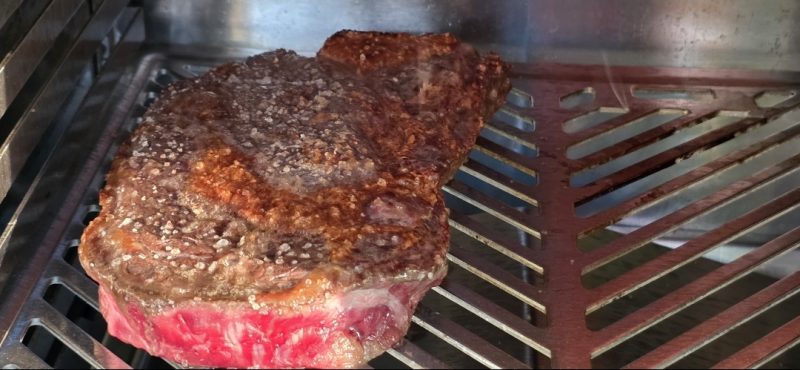
I put the steak on the rack down in the middle to lower third and let it start cooking. I get a feel for it, and I check with a Thermapen instant-read thermometer when I need to, though I try not to overuse it, because every time you poke a steak you let a little juice out. When it starts to come up, maybe a little over 100 degrees inside, I move it up to the very top of the rack, right under the burners, to get a really nice crust going. Then I flip it and do the same on the other side to seal it all in.
I pull it in the high 120s. The final temperature lands around 130 for where I like it, since it drifts up a little as it rests. I rest it on a wood cutting board and usually eat right off that board. I will add a little fresh ground pepper after it comes off, but I only ever cook it with salt. It is a little bit of an art, getting the feel for it, but that is the fun part.
Burgers, too
I do almost the same thing for burgers, just a touch hotter and a little longer. The cheese is the part I have changed, and the new way works a lot better.
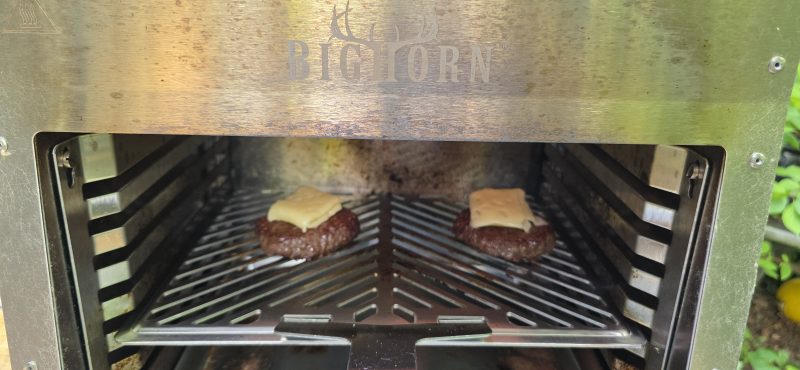
Here is the trick I landed on. I cut a standard slice of cheese into quarters and stack a couple of them, two or three, right in the center of each burger. I tried all four stacked up once and that was a bit much. Keeping the cheese in the middle instead of draping a whole slice over the top means it does not run off the edges and drip down into the grill, so there is a lot less mess. I let it start to melt with the rack down low, then slide the rack up closer to the burners to finish it off.
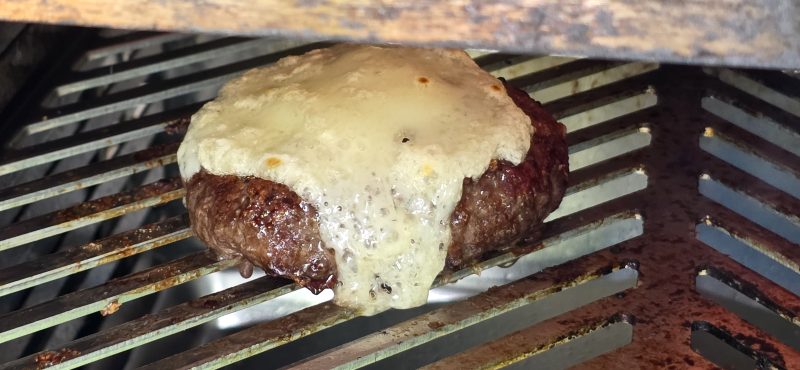
Pull them off once the cheese has that bubbly, golden finish. It still melts fast once you are up near the burners, so keep an eye on it, but starting low gives you a lot more control than blasting it from the top the whole way. It comes out clean and even, with the cheese right where you want it.
Cleanup
One thing I really like about this grill: the bottom drip shield and pan, the rack, and the handle are all dishwasher safe, so I just shove them in the dishwasher every day I use it. The whole unit gets very hot, so I would use an oven glove and tongs or a spatula to be safe, but if you are careful you can manage it.
A note on cheaper cuts
Nothing is going to taste quite like a good ribeye. But if you are working with a tougher, cheaper cut, that is where sous vide comes in. You can cook it sous vide first to tenderize it and then finish it on the grill, and it helps make up for the lower price. I have been doing mostly straight grilling lately, since this broiler is so hot it does a totally fine job on its own, but sous vide is a great technique, and I will dig into it in a future post.
That is roughly my whole steak routine. Simple ingredients, a very hot grill, and a little practice. More from my outdoor cooking: smoked pulled pork and smoked baby back ribs.